Special dubbed version of ‘East of Eden’ went on screen in Tehran
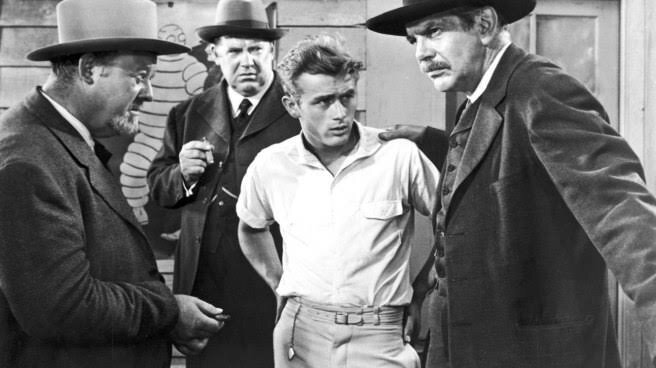
TEHRAN- A special version of Elia Kazan’s classic drama “East of Eden,” featuring an Iranian dub from the golden age of film dubbing in the country, was screened at Tehran’s Arasbaran Cultural Center on Wednesday.
The screening was followed by an analytical discussion with Amir Qaderi, editor-in-chief of the Iranian film website Cafe Cinema, offering audiences an opportunity to revisit the 1955 American film and discuss its themes, performances and place in cinema history.
Based on the novel of the same name by American author John Steinbeck, “East of Eden” is one of the best-known works associated with actor James Dean. The film, directed by Kazan and released in 1955, explores family conflict, sibling rivalry and the struggle for parental acceptance against the backdrop of California’s Salinas Valley in the early 20th century.
The program at Arasbaran Cultural Center is part of an initiative to present notable works of world cinema to Iranian audiences. Its emphasis on a high-quality Persian-dubbed version also highlights the country’s longstanding tradition of film dubbing, which has played an important role in introducing international cinema to generations of moviegoers.
“East of Eden” follows Cal Trask, a troubled young man who struggles to win the affection and approval of his father, Adam. Cal feels that his father favors his brother Aron, whose more conventional behavior makes him appear to be the preferred son. The brothers’ contrasting personalities and their competition for their father’s love drive much of the drama.
As the story unfolds, Cal attempts to prove his worth and gain recognition, but his efforts are complicated by family secrets and the emotional distance between him and his father. His relationship with Aron becomes increasingly strained, while the brothers’ encounters with Abra, Aron’s girlfriend, add another dimension to their rivalry.
The film draws on biblical themes, particularly the story of Cain and Abel, to examine jealousy, moral responsibility and the possibility of choosing a different path from the one expected of an individual. Through Cal’s struggle, the narrative raises questions about whether people are defined by their family circumstances and past experiences or can exercise control over their own choices.
Kazan’s adaptation does not simply reproduce the novel’s family saga. Instead, it concentrates on a portion of Steinbeck’s story, bringing the emotional conflict between Cal and Adam to the forefront. This focus allows the film to explore the need for parental recognition and the lasting effects of rejection on a young person’s sense of identity.
The film’s historical significance is also reflected in its awards. It received the Best Dramatic Film award at the 1955 Cannes Film Festival and won the Golden Globe for Best Motion Picture – Drama in 1956. At the Academy Awards ceremony that year, Jo Van Fleet won the Oscar for Best Supporting Actress for her portrayal of Kate, Cal and Aron’s mother. The film also received nominations for Best Actor for Dean, Best Director for Kazan and Best Writing (Screenplay) for Paul Osborn.
Dean’s performance as Cal became a defining moment in his brief career. His emotionally intense portrayal of a young man seeking acceptance helped establish his lasting image as one of the most memorable actors of 1950s Hollywood. “East of Eden” was his first major film role, and his performance brought a distinctive sense of vulnerability and rebellion to the character.
Kazan, meanwhile, was known for directing films that examined personal struggles alongside wider social issues. His approach to performance and character psychology made him one of the influential filmmakers of American cinema, with works such as “A Streetcar Named Desire” and “On the Waterfront” also earning significant critical recognition.
SAB/
Leave a Comment